
Soccer Rules for Kids: A Simple Parent and Player Guide
NEXO FC
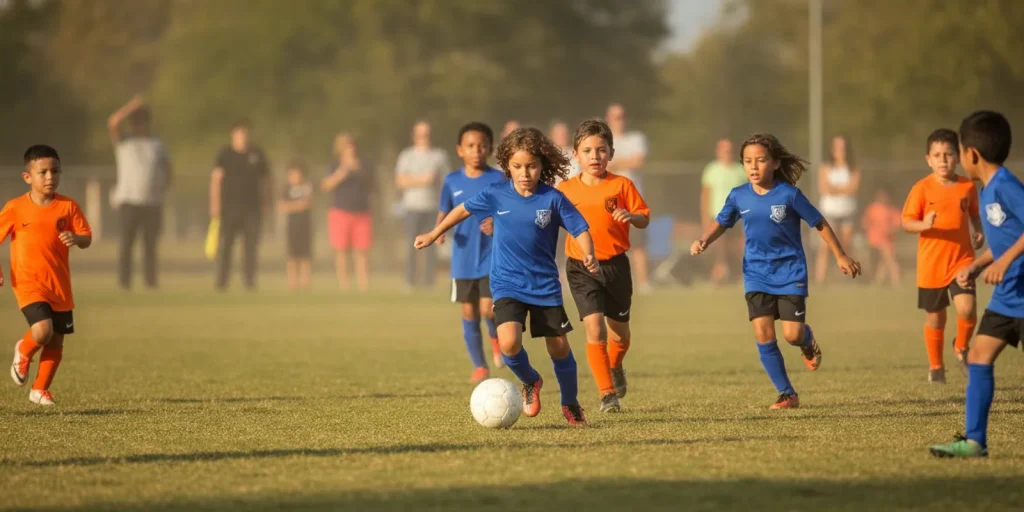
Learning the soccer rules for kids can make a first match easier to follow for players and parents. The basics are simple: move the ball toward the other team’s goal, score without using your hands or arms, and restart play in a fair way when the ball leaves the field or a foul occurs. Youth leagues may adjust details such as field size, match length, substitutions and offside, so check the rules for your child’s competition.
What are the basic rules of soccer?
Two teams try to score by moving the ball into the opposing goal. The team with more goals when the match ends wins. Players can use their feet, legs, body and head to play the ball, but field players generally cannot deliberately handle it with a hand or arm. The goalkeeper has a limited exception inside their own penalty area.
Most of the game is continuous. Players pass, dribble, defend and try to win possession while the referee watches for the ball going out, fouls and other rule violations. When play stops, the referee restarts it with a kickoff, throw-in, goal kick, corner kick, free kick or penalty kick, depending on what happened.
The principles stay familiar across age groups, but the exact competition rules do not always stay the same. A local youth league may use smaller fields, shorter periods, rolling substitutions, build-out lines or a different offside policy. Those adjustments help organize a youth game, but they do not mean every league follows an identical rulebook. Coaches and parents should use the current rules supplied by their league or tournament.
How does a team score, and when is a goal valid?
A goal is scored when the whole ball crosses the goal line between the goalposts and beneath the crossbar, provided the attacking team has not committed a violation that cancels the score. The ball can travel along the ground or through the air. It does not have to be struck hard, and a goal can come from a pass, a dribble, a rebound or a shot.
Only the ball’s position matters for deciding whether it crossed the line: if any part of the ball remains over the line, it has not fully crossed. Parents sometimes see a ball appear to be out from the sideline angle when it is still partly on the line. The referee or assistant referee is responsible for making the call based on the view available.
After a goal, the team that conceded restarts the match with a kickoff from the center of the field. The scorer does not need to take the next kickoff. Players return to their positions, and the referee signals for play to resume. A young player should celebrate, then be ready to get back into the game.
When is the ball in or out of play?
The ball is out of play when the whole ball has crossed a touchline or goal line, on the ground or in the air, or when the referee stops the match. If the ball touches a boundary line but has not crossed it completely, it remains in play. A ball can also rebound from a goalpost, crossbar, corner flag or referee and remain in play, depending on the situation.
When the ball goes out over a touchline, the restart is usually a throw-in for the team that did not touch it last. When it crosses a goal line, the restart depends on who last touched it and where it crossed. A corner kick or goal kick is awarded. The referee’s decision tells players which team restarts and where to do it.
Parents can help by teaching children to keep playing until they hear a whistle or see the referee stop the match. Players should not assume the ball is out just because it looks close to a line. If they stop early and the referee has not stopped play, an opponent may continue playing the ball.
How do kickoffs and restarts work?
A kickoff starts each half and restarts play after a goal. The ball is placed at the center mark. Players must follow the referee’s directions about their positions, and the player taking the kickoff moves the ball to put it into play. The other players wait for the restart rather than crowding the ball.
Every restart has a specific purpose. A throw-in brings the ball back after it crosses a touchline. A goal kick or corner kick restarts play after the ball crosses a goal line and the defending team or attacking team is entitled to the restart. A free kick or penalty kick follows certain fouls or rule violations. The location and method matter: taking a restart from the wrong place or in the wrong way can lead to a retake or a change of possession.
For young players, the best first step is to listen for the referee and look at the direction they indicate. They do not have to memorize every technical detail at once. Learning the difference between “our ball” and “their ball,” then practicing the correct restart, builds understanding over time.
What do common game situations look like?
Rules are easier to remember when children connect them to moments they see on the field. Imagine a pass rolls over the sideline after a defender touches it last. The opponents take a throw-in, and the referee points in the direction of their attack. If an attacker sends the ball over the goal line without scoring, the defenders usually take a goal kick. If a defender sends it over their own goal line, the attacking team usually gets a corner kick. In each case, the last touch helps determine the restart.
Now imagine two players reach a loose ball at nearly the same time. They may both try to play it, and contact can happen in a fair challenge. If one player trips, pushes or holds the other unfairly, the referee may stop play and award a free kick. The player who was fouled does not need to argue or demand a card. They can move away from the ball, listen for the decision and get ready to continue.
A third situation: a forward starts running toward goal just as a teammate passes. The referee considers the forward’s position when the teammate plays the ball, not where the forward was when the pass arrives. If offside applies in that league and the player in an offside position becomes involved in play, the referee may stop the attack. If the player was onside at the moment of the pass, running past a defender afterward does not make the player offside for that pass.
These examples are reminders, not a substitute for the referee’s judgment or local rules. A child may see only part of a play, and even adults watching from the sideline can have a different angle. Encourage players to accept the restart and focus on the next decision rather than trying to replay every close call in their minds.
How does a throw-in work?
A throw-in is awarded to the team that did not touch the ball last before it completely crossed a touchline. The throw is taken from near the point where the ball left the field. Under the standard rules, the player faces the field, uses both hands, brings the ball from behind and over the head, and keeps part of both feet on or behind the touchline and on the ground when releasing it.
The thrower cannot immediately touch the ball again until another player has played it. An opponent should give the thrower the distance required by the competition rules and should not interfere with the throw. If a throw is taken incorrectly, the other team may be awarded the throw-in. Youth leagues sometimes teach or apply the details differently for younger ages, so a coach’s demonstration is useful.
A throw-in is not a chance to pick up the ball and run down the line. Players should choose a teammate, get set, and send the ball into the field with the correct motion. Teammates can help by moving into a clear space and showing where they want the pass.
What is the difference between a goal kick and a corner kick?
If the attacking team last touches the ball before it completely crosses the defenders’ goal line without a goal being scored, the defending team generally receives a goal kick. If a defender last touches it before it crosses their own goal line, the attacking team generally receives a corner kick. The restart is taken from the goal area or the nearest corner area, as the rules specify.
For a goal kick, teammates spread out and try to provide safe passing options. For a corner, the attacking team puts the ball into play from the corner area and tries to create a scoring chance. Defenders organize themselves to protect the goal and challenge fairly. The referee may ask players to wait until the ball is correctly placed or until play is ready to resume.
Young players may initially find it hard to tell which team touched the ball last. It is fine to look toward the referee for the decision rather than argue. Learning to accept a close call calmly is part of understanding the game.
What counts as a foul in youth soccer?
A foul is an unfair action that breaks the rules. Common examples include kicking, tripping, pushing, holding or charging an opponent unfairly. A player can also be penalized for handling the ball illegally. The referee considers what happened, including whether a challenge was careless, reckless or used excessive force. Not every bump or accidental contact is a foul; soccer is a physical game, and players can compete shoulder to shoulder when it is fair and safe.
Some fouls lead to a direct free kick, which can be taken toward goal. Other violations result in an indirect free kick, which must touch another player before a goal can count. If a direct-free-kick offense occurs inside the defending team’s penalty area, the referee may award a penalty kick. The referee decides the restart and may also use a warning or disciplinary action when appropriate.
Players should try to win the ball, not the opponent. A safe challenge means watching the ball, keeping control of the body and avoiding a late or dangerous tackle. If a child falls or is hurt, teammates should give space and wait for the referee or coach to respond. Parents should avoid encouraging a player to retaliate after contact. A calm response protects the player and keeps attention on the game.
What can the referee do besides award a free kick?
The referee manages the match, applies the rules and helps keep play safe. Depending on the situation, the referee may allow play to continue when the team that was fouled can benefit from keeping possession. This is often called advantage. The referee may also stop play for an injury, an unsafe challenge or misconduct. Players should not expect a whistle after every small contact, because the official judges whether an offense occurred and whether play should be stopped.
For serious or repeated misconduct, the referee can show a yellow card as a caution or a red card to send a player off. The rules for when cards are used and how they affect a youth team follow the competition’s regulations. Children should never try to argue with or surround the referee. If a player is confused, they can ask the coach for an explanation after the match in a respectful way.
Parents can make the referee’s job easier by keeping comments respectful and staying in the designated spectator area. Officials may be volunteers or working under the same pressure as the players, and a loud disagreement rarely helps a child understand a decision. Applaud effort, safe play and good sportsmanship from both teams. That gives children a clear example of how to respond when a call goes against them.
What happens after a foul or other offense?
The referee chooses a restart based on the kind of offense and where it happened. A direct free kick allows the player taking it to shoot straight at goal and score without another player touching the ball. An indirect free kick must touch another player before a goal can count. The referee may signal an indirect free kick by holding an arm raised until the ball touches another player or goes out of play. For a young player, the practical lesson is to wait for the whistle or referee’s instruction and take the kick from the correct place.
A defending team may form a wall to block a direct free kick. Opponents must respect the distance set by the rules, and the referee may ask them to move back. The attacking player can pass to a teammate instead of shooting. Teammates should stay alert and avoid moving into the wall or distracting the goalkeeper unfairly. The defending goalkeeper can organize the wall, but should return attention to the ball as the kick is taken.
A penalty kick is awarded for certain direct-free-kick offenses committed by the defending team inside its own penalty area. The kick is taken from the penalty mark, with the goalkeeper defending the goal and other players positioned as required. The kicker must follow the referee’s signal and cannot play the ball a second time until another player has touched it. Penalty procedures have technical details, so players should follow the referee’s directions rather than rushing to retrieve a rebound.
Not every stoppage is caused by a foul. The referee can stop play for an injury, an equipment concern, an outside interference or another reason. The restart depends on what happened. If an injured player needs attention, the other players should make space and wait. They should not restart just because the ball is nearby; the referee decides when and how play resumes.
Can a player use their hands?
Field players generally cannot deliberately play the ball with a hand or arm. The rule has details about the position of the arm and how the ball was played, so an accidental touch is not automatically judged the same way as a deliberate action. The referee makes the decision based on the play. Players should not assume that every ball hitting an arm is a foul, or that every accidental touch is allowed in every situation.
The goalkeeper may handle the ball inside their own penalty area, subject to restrictions. For example, the goalkeeper cannot use their hands when a teammate deliberately kicks the ball to them under the relevant rule, or when receiving it directly from a teammate’s throw-in. The goalkeeper may use their hands to make a save or collect a ball in other permitted situations inside the area.
Outside the goalkeeper’s own penalty area, the goalkeeper follows the same handball rules as other field players. Children do not need to learn every exception before playing. The practical reminder is simple: field players use their feet and body, the goalkeeper protects the goal with hands only where the rules allow, and everyone follows the referee’s call.
What is offside, and do all kids’ leagues use it?
Offside is one of the rules that can be confusing to new players and parents. Under the standard rule, a player may be penalized for being in an offside position when a teammate plays the ball if that player is also involved in active play. The position is judged at the moment the teammate plays or touches the ball, not when the receiver eventually gets to it.
In general, a player is in an offside position when they are in the opponents’ half and nearer to the opponents’ goal line than both the ball and the second-last opponent. Being in an offside position by itself is not an offense. The player must become involved in active play, such as playing the ball, interfering with an opponent or gaining an advantage from a rebound or deflection, as defined by the rules.
A player cannot be offside in their own half. A player also cannot be penalized for receiving the ball directly from certain restarts, including a goal kick, throw-in or corner kick. These details are easier to understand by watching the timing of the pass and the receiver’s position together. Being ahead of a defender is not automatically offside if the player is level with the ball or still in their own half when the teammate plays it.
Many youth competitions modify offside or introduce it only at certain stages. Others use it according to their age-group rules. Do not assume that a rule used in one league applies to another. If offside is part of the competition, the coach can explain the local version with a few examples on the field.
What does the goalkeeper need to know?
The goalkeeper’s main job is to prevent the other team from scoring and help organize the defense. The goalkeeper can use hands inside their own penalty area when permitted, but should use their feet when playing outside it. They must not hold the ball indefinitely or block opponents unfairly. The exact limits and enforcement are governed by the current rules used in the competition.
Goalkeepers should communicate clearly with teammates, but they are still learning too. A short call such as “keeper” or “away” can help teammates understand who will play the ball. Players should not run into the goalkeeper or challenge in a dangerous way. At the same time, the goalkeeper must follow the same expectations for safe, fair play as everyone else.
Some leagues rotate children through goalkeeper and field positions, while others organize the role differently. Parents can ask the coach how goalkeeper participation works for that age group. Early soccer is a good time for children to learn different parts of the game rather than assume they must stay in one role.
How long is a kids’ soccer game?
There is no single match length for every child. Age group, governing organization, league format, tournament schedule and local rules can all affect the length of a game. Youth matches may use shorter halves or periods than adult matches, and small-sided formats may have different timing. The referee or competition organizer follows the schedule established for that event.
Ask the coach or organizer for the match duration, break between periods and any rules about added time. Tournament games may have special procedures if a match is tied, while regular league games may simply end after the scheduled time. Do not rely on the length of a sibling’s match or a previous season’s schedule as proof that the current game uses the same format.
For a young player, the important habit is to keep playing until the referee ends the period. A whistle, not a parent’s watch, signals the official end. Parents can help by planning for the full event window and encouraging children to drink water during permitted breaks.
How do substitutions work?
Substitution rules vary widely in youth soccer. Some leagues allow players to rotate frequently so they can rest and participate. Others set limits, require substitutions at specific stoppages or use different rules for tournaments. The coach or team staff manages substitutions in line with the competition’s procedures.
A player should wait for the referee’s permission or the coach’s signal before entering, and should leave the field at the designated place when asked. Running on before a teammate is off can create confusion or result in a rules issue. A child who comes off should be ready to listen, recover and support teammates from the sideline.
Playing time and rotation plans are not determined by one universal rule. If a parent has a question about participation, it is best to ask the coach calmly outside the match. The answer may depend on the league format, attendance, player readiness and the team’s plan for that event.
What equipment and safety rules should kids follow?
Players should arrive in the clothing and equipment required by their league. Shin guards are commonly required, and they should be covered by socks. Soccer shoes should fit securely and suit the playing surface. Jewelry is generally not allowed during play because it can injure the player or someone else. Local rules may address medical alert items, protective equipment, braces and other exceptions, so check before game day.
Players should not wear anything that could cut, catch or strike another person. If a child has an item that cannot be removed, ask the coach or referee before play rather than assuming it is permitted. A goalkeeper may wear gloves, but gloves do not replace safe technique or the rules that apply to all players.
Safety also includes how players behave. Children should avoid dangerous tackles, pushing from behind, deliberate collisions and arguments with opponents or officials. If a player feels pain, is dizzy, or is otherwise unwell, they should tell the coach or an adult and stop playing until it is safe to continue. Adults should not pressure children to continue through an injury.
Which rules can youth leagues change?
Youth leagues may adapt the game to the age and format. Common differences include the number of players on the field, field and goal size, ball requirements, match duration, substitution procedures, offside rules and how play restarts. A league may also use special instructions for goalkeepers or how the ball is played out from the back. These are examples of areas to check, not a promise that every league changes them.
Before a season or tournament, look for a current rule sheet or ask the coach which rules apply. Pay particular attention to:
- Whether the competition uses offside and when that rule applies.
- How long matches and periods last, and what happens if time expires during an attack.
- How substitutions are requested and whether players may re-enter.
- Any special instructions for goal kicks, goalkeeper distribution or build-out areas.
- Required equipment, including shin guards and any restrictions on jewelry.
- What the referee does if weather, injury or another safety concern interrupts the match.
When a rule seems different from what a child has seen elsewhere, avoid correcting the referee from the sideline. Youth competitions can use different approved formats, and the referee is enforcing the rules for that match. Ask the coach to explain the detail afterward if it would help your child.
How can parents help kids learn soccer rules?
Children learn rules more easily when adults connect them to what just happened in the game. Instead of giving a long explanation during play, use one clear question afterward: “What happens when the ball goes over that side line?” or “Why did the referee stop play?” Let the child think before supplying an answer. This turns a stoppage into a quick learning moment rather than a lecture.
Focus first on a small set of habits: play safely, do not use hands as a field player, respect the whistle, and restart from the place the referee indicates. Add offside, more detailed handball decisions and restart procedures as the child becomes ready. A player does not need to explain every law perfectly to enjoy soccer or contribute to a team.
Parents can also model respect for officials and opponents. Referees may miss a call or see a play differently from the sideline. A calm response helps children recover quickly and keeps attention on making the next play. Avoid shouting tactical instructions that conflict with the coach or blaming a young player for an honest mistake.
Finally, keep league rules in perspective. Knowing the rules is useful, but children also need chances to move, make decisions, try skills and learn from mistakes. A supportive adult can help a child understand the game without making every moment feel like a test.
How can families choose a soccer program that fits?
Families comparing programs can ask how training is structured, what age group a child joins and how the coach supports learning. A child who is new to the game may benefit from an environment that makes movement, coordination and ball comfort enjoyable. A player seeking more structured competitive development may want to understand how practices build technique, decision-making, teamwork and confidence.
NEXO FC is the club’s competitive youth soccer program for ages 6–12. NEXO Tots serves ages 2–5 and introduces age-appropriate movement, coordination, ball comfort, dribbling, simple game concepts and small-sided play. You can review the NEXO FC program or learn about NEXO Tots classes to see which program information matches your child’s stage.
If your family is still figuring out whether a club setting feels right, a low-pressure way to learn more is an NEXO Open House. The youth soccer tryouts guide may also help families understand how to prepare for that separate evaluation process. Use current program information to confirm availability and details before making plans.
Frequently asked questions about soccer rules for kids
Can a child score directly from a kickoff?
Under standard soccer rules, a goal can be scored directly against the opposing team from a kickoff. Youth competition rules may include local variations, so check the rules used for the match.
Is a player offside just for standing near the other team’s goal?
No. Under the standard rule, an offside position alone is not an offense. The player must be in an offside position when a teammate plays the ball and then become involved in active play. A player in their own half cannot be offside.
Does every ball that hits a child’s arm count as handball?
No. The referee considers the circumstances and the applicable handball rule. Field players generally may not deliberately handle the ball, but an accidental contact is not automatically judged the same way in every situation.
Do all youth soccer leagues use the same rules?
No. Leagues can vary match length, substitutions, field format, offside and other details. Families should use the current rules from their league, tournament or coach rather than assuming one age group or competition matches another.
What should kids remember on game day?
Kids can start with a few reliable reminders: listen for the whistle, play fairly, use the correct restart, and keep trying after a mistake. The referee will help manage the rules, while coaches can explain the competition’s age-group adjustments. As children play, the details become easier to recognize and the game becomes more enjoyable for the whole family.
Categories
NEXO FC
Find your player's next step
Four ways to play at NEXO FC, all led by the same coaching staff.