
Soccer Performance Training: A NEXO FC Family Guide
NEXO FC
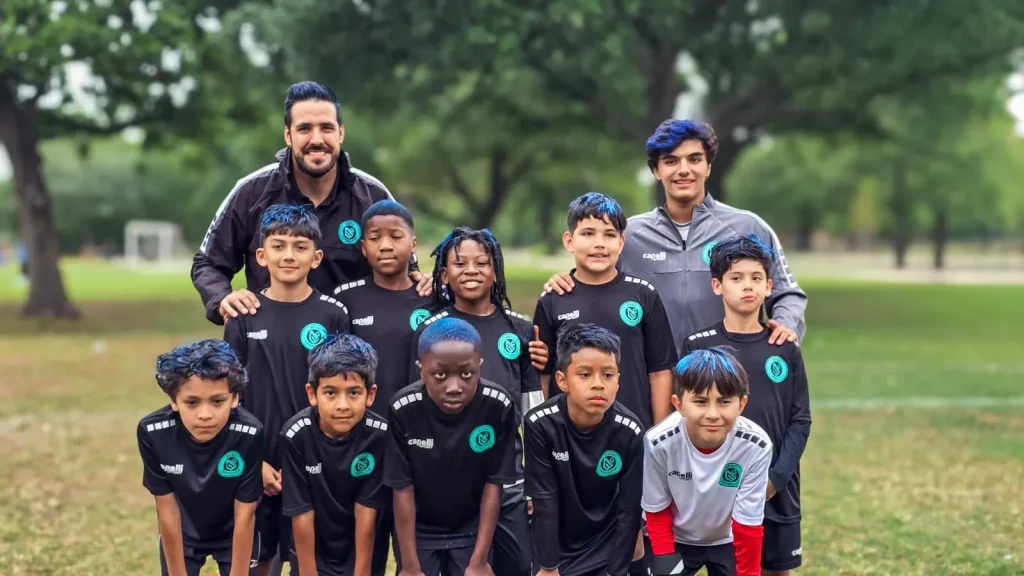
When families search for soccer performance training, they are often asking a bigger question: what kind of support will help a young player grow with confidence? The answer is more than a list of drills. Good training helps players build technique, understand space, make decisions, work with teammates, and enjoy the process at a level that fits their age and experience.
For Houston-area families, NEXO FC offers a path from early ball familiarity to competitive player development. This guide explains what to look for in soccer performance training, how to compare options, and which NEXO next step may fit your family.
What is soccer performance training?
Soccer performance training is structured practice that helps players perform more effectively in real game situations. It can include technical skills such as receiving, passing, dribbling, and finishing. It can also include movement, balance, coordination, scanning, communication, and decision-making under pressure.
The best training connects those pieces. A player may learn a passing technique, then practice recognizing when and where to use it. They may work on controlling the ball, then apply that skill while an opponent closes space. The goal is not to make every session feel like a test. It is to give players repeated, age-appropriate opportunities to notice, choose, execute, and reflect.
For young players, performance should not be reduced to speed, strength, or the outcome of one match. Progress can also look like a player checking their shoulder before receiving, moving to support a teammate, responding after losing the ball, or trying a new solution instead of giving up after a mistake.
What should families look for in a training program?
Before choosing a soccer performance training option, look beyond the name of the program. Consider how the sessions are organized and what the player will be asked to learn.
- Age-appropriate progression:
Activities should match the player’s stage of development. Younger children need playful movement and frequent touches on the ball, while older players can gradually work with more tactical information and pressure.
- Technique connected to decisions:
Players should have chances to use a skill in a changing situation, not only repeat it without opposition.
- Small-sided learning:
Smaller games can give players more involvement and more chances to read space, communicate, and make choices.
- Clear coaching:
Coaches should explain the purpose of an activity and give feedback that a child can understand and try.
- Positive standards:
Discipline, effort, respect, teamwork, and enjoyment can coexist. A demanding environment does not need to be demeaning or fear-based.
- A realistic family fit:
Location, schedule, program length, and the player’s interest all matter. The most advanced-sounding option is not automatically the best next step.
It is also useful to ask how a program defines progress. If the only answer is winning, scoring, or making a particular team, families may not learn enough about the daily learning experience. A strong conversation includes habits, confidence, understanding, teamwork, and the player’s ability to keep learning.
How does age affect the right training approach?
Children do not all develop at the same pace, so age is a starting point rather than a complete evaluation. A younger child may benefit from movement, coordination, ball comfort, and simple games. A player entering more structured competition may need a balance of technical repetition, game awareness, tactical clarity, and confidence under pressure.
For families with a child ages 2–5, NEXO Tots provides an early introduction through age-appropriate movement, coordination, ball comfort, dribbling, simple game concepts, and small-sided play. The emphasis is on helping children become comfortable participating and exploring the game.
For players ages 6–12, NEXO FC Competitive provides a more structured pathway. NEXO FC describes its approach as built on intention: how players train, how they play, and how they grow. Sessions develop decision-making, spatial awareness, and tactical clarity, alongside technical work and team habits. Teams generally train twice a week at Oakridge in Conroe and play weekend league games according to the league calendar.
NEXO Soccer Camps serve players ages 6–13 through outdoor camp opportunities at Oakridge. Camps can be a practical way for a player to get additional touches, experience a focused soccer environment, or explore NEXO before making a longer-term program decision. Check the current camp schedule for the available session and registration details.
What does player development look like at NEXO FC?
NEXO FC’s published development philosophy combines individual growth with the way a player contributes to the team. Families can look for four connected areas during training and matches:
- Tactical intelligence:
Reading the game, anticipating situations, and making decisions as play changes.
- Technical excellence:
Building control and precision so a player can carry out an idea with the ball.
- Team spirit:
Communicating, supporting teammates, and accepting a shared responsibility for the team.
- Mental fortitude:
Responding to setbacks, continuing to learn, and building confidence in difficult moments.
This kind of soccer performance training gives parents a more useful way to observe progress. Instead of asking only whether a player scored, notice whether they recognized space, offered support, recovered after a mistake, or used feedback in a later situation. Those observations can help families and coaches have a clearer conversation about the next area to develop.
How can parents support development between sessions?
Parents do not need to recreate a full training session at home. A few low-pressure habits can reinforce learning without making soccer feel like another school assignment.
- Ask one process question:
Try “What did you notice?” or “Where could you move next time?” instead of focusing only on the final result.
- Make room for free play:
Unstructured play can give children space to experiment, repeat favorite skills, and make their own choices.
- Celebrate useful actions:
A smart pass, a supportive run, a recovery effort, or a brave attempt can matter even when it does not create a highlight.
- Protect recovery and enjoyment:
Rest, hydration, school, family time, and the player’s own motivation are part of a sustainable development experience.
- Share context with the coach:
If a player is nervous, changing positions, returning from a break, or struggling with a particular part of the game, that context can make feedback more helpful.
Avoid turning every car ride home into a performance review. Young players often learn more when they have time to process a session and return to the field with curiosity.
What can a useful training session include?
Every coach organizes sessions differently, but families can look for a clear connection between the activity and the player’s learning. A session might begin with a simple technical action, then add movement, a decision, a teammate, or an opponent. That progression gives a player a chance to understand the skill before using it in a more realistic situation.
For example, receiving the ball is not only about stopping it cleanly. The player may also need to check the space around them, choose a first touch, protect the ball, and decide whether to pass, dribble, or turn. A coach can adjust the distance, pressure, field size, or number of players so the challenge is appropriate without making the activity unnecessarily complicated.
Game-based activities can make learning visible. A player may have several opportunities to solve the same type of problem, but the picture changes each time because teammates and opponents move. This is where technical ability and game understanding begin to work together. The player learns that a skill is a tool for solving a problem, not a performance to display in isolation.
Families should not expect every session to look intense from the sideline. A thoughtful practice may include demonstrations, questions, rest, repetition, and short games. What matters is whether players are engaged, understand what they are trying to learn, and receive opportunities to apply it.
How can families compare soccer training options?
Two programs can use similar words while offering very different experiences. Before registering, write down what your family actually needs. Is your child looking for a first organized experience, more consistent training, a team environment, a school-break activity, or information about a tryout? A clear goal makes comparison easier.
Use the following questions when reviewing a program:
- Who is the program for?
Check the published age range and whether the activities are designed for beginners, experienced players, or a mix.
- What happens during a typical session?
Ask how much time players spend with the ball, in small-sided games, and receiving coach feedback.
- How does the program handle different levels?
A player should be challenged without being made to feel behind.
- What is the family commitment?
Confirm the location, days, season length, registration process, and any details that affect your weekly routine.
- How will we know whether it is a fit?
Ask whether families can attend an Open House, review program information, or speak with the club before choosing a longer-term option.
It is reasonable to compare convenience and cost, but those are only part of fit. A nearby program that your child enjoys and attends consistently may support more learning than an option that creates a difficult weekly commute. Likewise, a competitive environment may be a good match for one player and too much structure for another. The player’s voice belongs in the decision.
What questions can parents ask after a session?
Parents can support a better feedback loop by asking the coach focused questions. Instead of requesting a general rating, ask what the player is learning and what one next step would help. Questions such as these can lead to a more useful conversation:
- What decision is my child beginning to recognize more consistently?
- Which technical skill would make that decision easier to carry out?
- What can we encourage at home without adding pressure?
- Is the current challenge appropriate for my child’s stage?
- What should we watch for over the next few weeks?
These questions keep the focus on development rather than comparison. They also help parents understand that a player can be making progress before the change appears in a goal, a win, or a highlight. Small improvements in awareness, communication, and response to mistakes often become the foundation for later performance.
Which NEXO FC next step is right for your family?
The right next step depends on your child’s age, experience, interest, and readiness for the structure of the program.
- Exploring the game for the first time?
Review
NEXO Tots
for the ages 2–5 pathway. - Looking for a competitive development environment?
Learn about
NEXO FC Competitive
for players ages 6–12. - Want a focused seasonal experience?
Visit the
NEXO Soccer Camps
page and check the current schedule for players ages 6–13. - Considering a team opportunity?
Review the current
programs and tryout information
before registering.
NEXO FC trains at 28137 Robinson Rd., Conroe, TX 77385. Families who are still comparing options can use the programs page to review the available pathways, then contact NEXO with questions about fit, schedule, and registration.
Contact NEXO FC about the right next step
Final thoughts
Soccer performance training works best when it is purposeful, progressive, and appropriate for the player in front of the coach. Families should look for a program that develops technique and decision-making while also protecting confidence, teamwork, and enjoyment.
For Houston-area families, NEXO FC offers several entry points, from NEXO Tots and camps to NEXO FC Competitive and tryouts. Start with the pathway that matches your child today, ask clear questions, and let development build over time.
By Nexo Football Club.
Categories
NEXO FC
Find your player's next step
Four ways to play at NEXO FC, all led by the same coaching staff.