
Helping Kids Build Consistent Soccer Practice Habits
NEXO FC
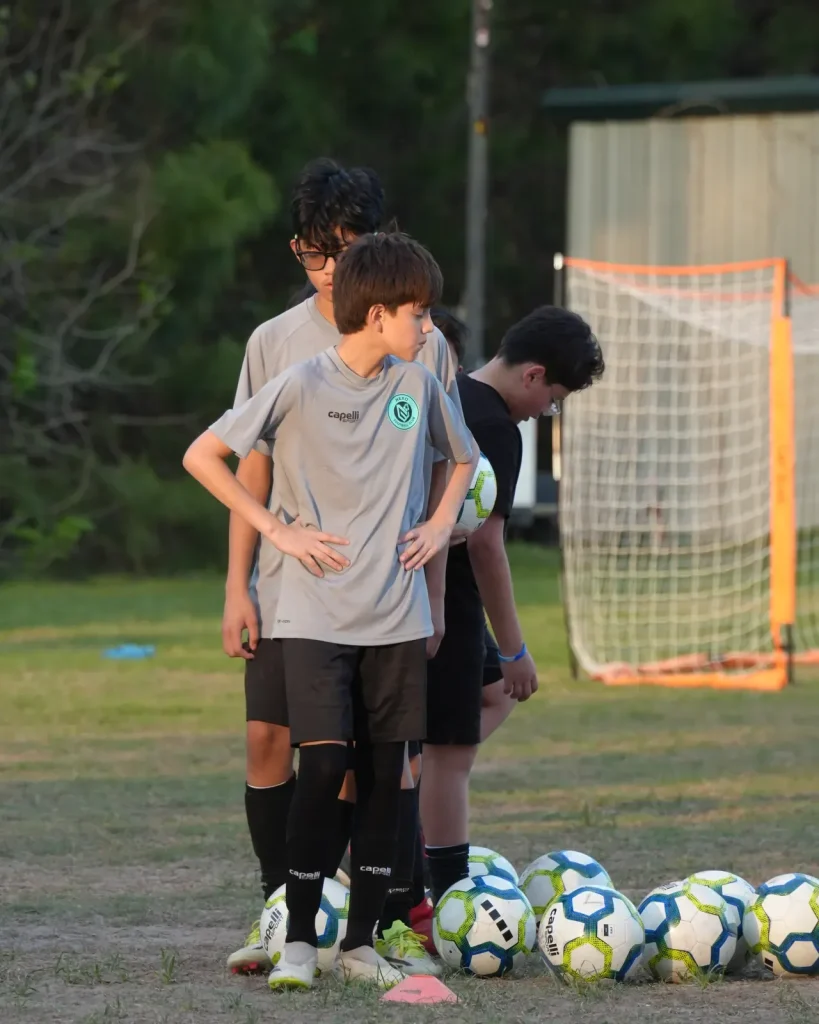
Consistent soccer practice attendance is rarely about finding a perfect week. Families have school, work, homework, weather, appointments, and changing energy levels to manage. Young players also move through different stages: a preschooler may need a short, playful introduction, while an older player may be ready to take more responsibility for preparation and follow-through.
Explore NEXO programs for your family
The goal is not to make every training day feel like a test. It is to help soccer become a predictable, positive part of family life. When practice has a clear place on the calendar, the player knows what to expect, and adults support the routine without turning every missed session into a conflict, attendance becomes easier to maintain.
Here is a practical family guide to building that routine, handling common obstacles, and choosing a soccer environment that helps your child keep growing.
Why consistent practice matters for young soccer players
Players develop through repeated experiences. A child gets more comfortable with the ball by touching it often. Decision-making improves when a player repeatedly sees situations, tries a response, receives guidance, and gets another chance. Team habits also grow through regular participation: listening to a teammate, moving into space, recovering after losing the ball, or encouraging someone else.
Attendance is only one part of development, and missing a session does not erase progress. Still, a predictable pattern gives a player more opportunities to connect what they learn from one practice to the next. It also helps them feel part of the group. When a child knows the coach, recognizes teammates, and understands the rhythm of a session, joining in can feel more comfortable.
For parents, it helps to think beyond a simple “attended” or “missed” label. A consistent practice habit can include:
- Knowing which days training happens and preparing for those days in advance.
- Arriving ready enough to participate, with water, appropriate clothing, and the needed equipment.
- Communicating early when a conflict or illness makes attendance impossible.
- Returning to the routine after a missed session rather than treating one absence as failure.
- Helping the player notice effort, learning, teamwork, and enjoyment instead of focusing only on performance.
This approach keeps attendance connected to healthy development. It also gives children a model they can carry into other activities: make a plan, show up when you can, communicate when plans change, and begin again.
Start with a realistic weekly routine
A routine works best when it reflects your actual family schedule. Before promising extra sessions, look at the week as it really is. Note school dismissal, homework, meals, siblings’ activities, commuting time, and the period when your child typically has the most energy. Then place soccer into the week with enough time to get there without making every training day a race.
If a team trains twice a week, those two sessions can become the foundation of the routine. NEXO FC’s current program information describes twice-weekly training at Oakridge for its competitive players, with age-group schedules listed on the NEXO FC page. A family can use those fixed sessions as anchors, then decide what preparation needs to happen before each one.
Try a simple planning conversation on the weekend:
- Look at the upcoming calendar together.
- Circle the soccer sessions.
- Choose when the uniform, shoes, and water bottle will be prepared.
- Identify one likely conflict before it becomes a last-minute surprise.
- Decide what a calm departure time looks like.
Keep the plan visible. A paper calendar, family wall planner, or shared phone calendar can all work. Younger children may benefit from a picture or color associated with soccer. Older players can take ownership of checking the calendar and packing their own bag, with an adult providing a final reminder when needed.
Consistency does not require an elaborate system. It requires a small number of steps that the family can repeat on ordinary weeks.
Make preparation part of the habit
Many attendance problems begin before the player decides whether they want to practice. A missing sock, an empty water bottle, or a late homework assignment can create stress that makes leaving harder. Preparing in advance reduces the number of decisions the family has to make at the busiest moment of the day.
Create a short pre-practice checklist that matches your child’s age:
- Soccer clothes and shoes.
- Water.
- Any team item or ball the coach has requested.
- A quick snack if the timing between school and practice calls for one.
- A plan for homework and dinner.
For a younger player, the adult may do most of the preparation while the child chooses between two shirts or places the water bottle in the bag. For an older player, the child can check each item and learn what needs to be replaced or washed. The point is not to make the player manage everything immediately. It is to transfer responsibility gradually.
It can also help to use a consistent transition. For example, the family might have a snack after school, change clothes, complete a short homework block if time allows, and leave at the same point in the routine. The exact sequence will vary, but a familiar pattern can make practice feel like a normal part of the day rather than an unexpected interruption.
Set goals that children can control
Attendance habits are stronger when the child understands what practice is for. A goal such as “become the best player” is too broad to guide a six-year-old through a difficult afternoon, and it may make an older player feel that every session must produce visible improvement.
Instead, choose one or two process goals. Examples include:
- Listen for the first instruction before starting an activity.
- Try the move with both feet when the coach asks.
- Look up before receiving or passing the ball.
- Encourage a teammate once during a game.
- Respond positively after a mistake and try the next action.
- Ask one useful question when something is unclear.
These goals connect attendance to learning without making the child responsible for outcomes they cannot control. A parent can ask, “What is one thing you want to work on today?” before practice and “What did you notice?” afterward. The questions invite reflection without turning the car ride home into a performance review.
NEXO FC describes its development approach around decision-making, spatial awareness, tactical clarity, technique, resilience, teamwork, and a family culture. Those themes give families useful examples of what to notice. A child may not master a new skill in one session, but they can practice looking for space, making a decision, communicating, or staying engaged after a mistake.
Keep home practice short and enjoyable
Team practice does not need to be duplicated at home. A short activity can reinforce the habit of touching the ball without making soccer feel like another assignment. For many children, five to fifteen minutes is enough for a positive home practice moment, especially when it fits naturally into the day.
Choose an activity that is safe for your space and appropriate for your child. A player might:
- Dribble around a few visible objects with control.
- Practice gentle touches with the inside and outside of each foot.
- Pass with a family member over a short distance.
- Receive a rolled ball and stop it before passing it back.
- Practice looking up between touches.
- Play a simple movement game that includes balance, turning, or coordination.
End while the child still wants another turn. The objective is to build a positive association with practice, not to exhaust the player. Avoid comparing siblings or teammates, and do not turn a small home activity into a correction-heavy coaching session. Parents can celebrate effort and curiosity while leaving technical instruction to the child’s coach.
If the family does not have a safe space or time for home practice, that is okay. A consistent team routine can still provide meaningful development. Home support should reduce pressure, not create a second training obligation.
Use encouragement instead of pressure
Children notice the emotional tone around attendance. When every practice is framed as an obligation or a chance to prove themselves, a player may start to associate soccer with conflict. Encouragement does not mean ignoring responsibilities. It means communicating clear expectations while preserving the child’s sense of ownership and enjoyment.
Parents can try language such as:
- “Practice is on the calendar. Let’s get ready together.”
- “You do not have to feel excited every time. You can still take the next step.”
- “What would help you feel prepared today?”
- “Everyone makes mistakes while learning. What will you try next?”
- “I liked the way you kept working with your teammates.”
At the same time, listen when a child repeatedly resists practice. Reluctance may signal tiredness, a schedule that is too full, anxiety about the group, frustration with a skill, or a mismatch between the program and the child’s current needs. Ask open questions at a calm time, not only in the car when the family is already late.
The answer may be a small adjustment: an earlier snack, a clearer packing routine, a conversation with the coach, or a short break. If the concern continues, speak with the program so the adults can understand what the player is experiencing.
Plan for missed practices without losing momentum
Illness, family events, school commitments, weather, and other unavoidable conflicts happen. A healthy attendance plan includes a response for those situations. The goal is to make a missed practice a change in the schedule, not a reason to abandon the routine.
When a session must be missed:
- Communicate with the coach or program as early as practical.
- Help the child understand when the next practice will be.
- Avoid trying to “make up” the session with an exhausting workout.
- Return to the normal preparation routine for the next scheduled day.
- Ask the coach what, if anything, the player should know before returning.
If a child misses several sessions, the return may feel awkward. A simple welcome back can help: pack the bag together, arrive with enough time to settle in, and remind the player that they can focus on the next activity rather than explaining everything at once. Coaches can help the player reconnect with the group and understand the session.
Families should also avoid promising attendance when a player is sick or injured. Health and safety come first. When in doubt, communicate with the appropriate adult or professional and follow the program’s guidance.
Choose an age-appropriate soccer environment
A routine is easier to sustain when the program fits the child’s age, goals, and family logistics. The right question is not only, “How often does my child practice?” It is also, “Does this environment help my child feel challenged, supported, and able to participate consistently?”
NEXO’s program pathway includes options for different stages. NEXO Tots serves ages 2–5 with age-appropriate movement, coordination, ball comfort, dribbling, simple game concepts, and small-sided play. The current Tots information lists Monday and Wednesday classes at Oakridge in Conroe, with separate age-group focuses for ages 2–3 and 4–5. Short, developmentally appropriate sessions can help families introduce a routine without expecting preschool players to train like older athletes.
For players ages 6–12, NEXO FC provides competitive soccer with twice-weekly training at Oakridge and weekend league games according to the league calendar. Families can review the current NEXO FC details and consider whether the schedule and development approach fit their child.
NEXO also offers camps for ages 6–13 during school breaks. The NEXO Soccer Camps page describes outdoor camps at Oakridge in Conroe, with activities such as ball mastery, dribbling, passing, finishing, 1v1 play, small-sided games, coordination, and teamwork. A camp can be a useful way for a family to explore a soccer environment or add activity during a break, subject to the current schedule and registration details.
Age ranges, schedules, prices, and availability can change. Check the current program page or contact NEXO before making a decision.
Build the habit together as a family
Young players depend on adults for transportation, time, equipment, and emotional support. That does not mean parents must manage every detail forever. A consistent habit develops through a gradual partnership.
Adults can provide the structure: put practices on the calendar, protect the departure time, communicate with the program, and make sure the child has what they need. Children can increasingly provide the ownership: choose a process goal, pack part of the bag, ask questions, and reflect on what they learned.
Family routines also become more durable when responsibilities are shared realistically. One adult may handle transportation while another helps with dinner or homework. Older siblings may help a younger child find a water bottle. The player can participate in preparation even when the adults remain responsible for the final decision.
A weekly five-minute check-in is often enough:
- What soccer sessions are coming up?
- What might make those days difficult?
- What can we prepare now?
- What is one small goal for the next session?
This keeps the conversation practical and gives the child a voice. It also makes it easier to notice when the family schedule needs an adjustment before frustration builds.
Help your child take the next soccer step
Consistent soccer practice attendance grows from realistic expectations, predictable preparation, and a positive relationship with the game. Families do not need a perfect record or a complicated training plan. They need a routine that fits their life, a program that fits the player, and adults who support effort and communication.
If you are exploring options in the Houston area, start with NEXO’s programs page to compare NEXO FC, NEXO Tots, camps, and tryouts. Families can also review registration information or contact NEXO with questions about the right fit. For players considering competitive soccer, current tryout details include the available birth years, locations, and schedule.
Contact NEXO about the right next step
The best next step is the one your family can understand and sustain. With a clear plan and the right support, each practice becomes more than a calendar event: it becomes another opportunity for a young player to learn, contribute, and enjoy the game.
Categories
NEXO FC
Find your player's next step
Four ways to play at NEXO FC, all led by the same coaching staff.