
Soccer Tryout Drills: What Parents Should Notice
NEXO FC
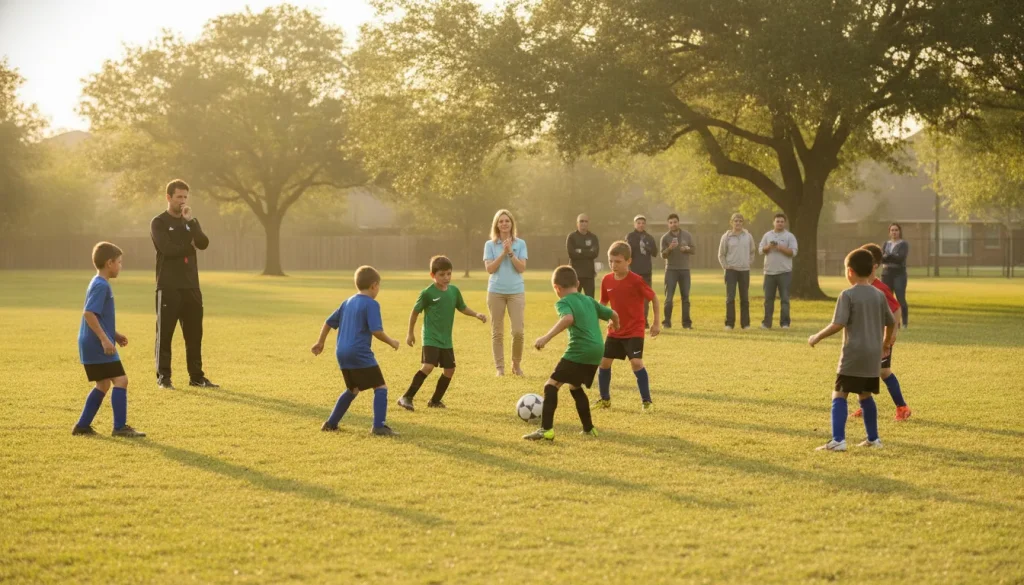
Soccer tryout drills are the short activities a coach uses to see players with the ball, without the ball, and alongside other kids. A parent on the sideline can learn a lot from them, but the session is not a score. One clean pass, one missed touch, or one quiet minute does not decide the day.
Call (832) 422-5011 about NEXO FC tryouts, or see current tryout dates and contact NEXO FC with a question.
This guide is for families watching a session, not for coaches building one. It covers what a few common activities tend to show, what they hide, and how to talk about them on the ride home. If you want the weeks before the session, start with how to prepare for youth soccer tryouts. If you want the day itself, read what actually happens at a youth soccer tryout.
What Soccer Tryout Drills Are For
A drill is a small window. Coaches use it because a full game can hide some players and spotlight others. In a short activity, more kids touch the ball, and the coach can watch the same action more than once.
Families comparing the club itself can start with how NEXO FC describes its competitive program. This article stays on the sideline view. It does not repeat a training calendar, a fee sheet, or the registration steps.
That window is still narrow. A line of players receiving passes can show a first touch, but it cannot show whether a child stays composed when a teammate needs help. A small game can show choices, and it still cannot show how that child trains on an ordinary weeknight.
Watch the next action, not the highlight. Parents often watch for the spectacular touch, while coaches are often watching what happens next. Did the player look up before the ball arrived, jog back after a turnover, or try the instruction they just heard? Those habits are easier to notice once you know what the activity is asking the group to do.
Use the live tryout page for dates, times, and places. The NEXO FC tryout page is the current source for who the sessions are for and where they are held. It does not publish a drill sheet, and it should not, because activities change with the group in front of the coach. Treat any drill list you find online as someone else’s session, not yours.
The useful question is simpler than a copied worksheet. What can this activity show, and what would it be unfair to conclude from a single repetition? That question stays useful even when the coach changes the order of the afternoon.
What a Parent Can and Cannot See
From the sideline you can see effort, body language, and a few soccer actions. You cannot see the coach’s notes, the needs of a specific team, or how the player compares with kids who are not on the field that day. Holding both of those limits in mind keeps one activity from turning into a verdict.
Use the table below as a viewing guide rather than a grading sheet. Do not treat any row as a promise about selection, and do not add up the rows into a score.
| What you might see | A fair reading | An unfair leap |
|---|---|---|
| A heavy first touch in a receiving line | That repetition was messy. Watch the next one. | The player cannot control a ball. |
| A simple pass instead of a dribble | The player chose a teammate. That can be the point. | The player is not skilled enough to keep the ball. |
| Losing a 1v1 | One duel went to the other child. Roles rotate. | The player will not make a team. |
| Standing still for a moment in a game | They may be unsure, tired, or watching the play. | They are not competitive. |
| A coach says little to your child | Attention is split across the whole group. | The coach has already decided. |
| Your child smiles after a mistake | They reset. That is a useful habit. | They are not taking it seriously. |
Selection also depends on numbers, age groups, and how a roster fits together. A strong session can still end without an invitation, and a quiet session can still lead to a follow-up. Neither outcome is hiding inside one pass.
A missed date is a separate question from the drills. If a family cannot make a listed date, or has a question about the next step, use the NEXO FC contact page or the current tryout page. That question is not a second score for the activities you watched, and it does not require you to invent a meaning for the minutes you missed.
Ball Work and Receiving Lines
Many sessions open with players receiving a pass, controlling it, and playing it on. The pattern looks basic. It is still one of the clearest views of a first touch, because the ball keeps coming and the player cannot hide.
Watch the touch, then watch the head. A player who stops the ball under their feet every time is solving only the first problem. A player who lets the ball roll into the space they want to play next is already thinking about the pass. Both can look sharp or messy depending on how fast the feed arrives.
Also notice the non-soccer parts of the line. Does the player listen when the coach changes the pattern? Do they keep a safe distance from the child in front? Do they jog to the back instead of walking off? Those details are part of the activity even though nobody is keeping score.
Do not coach from the sideline during this. A shouted correction arrives late and makes the next touch worse. Save the observation for later, and if your child wants to talk, one warm sentence about staying with a messy ball is enough.
What this activity hides
A receiving line has little pressure from an opponent. A clean touch here does not prove the same touch will show up in a crowded game. A messy touch does not prove the opposite either. Weather, a new ball, and nerves all change how the ball arrives.
Passing Patterns and Playing to a Teammate
Passing activities ask a different question: can the player find a person, not just strike a ball? In a pattern, everyone has a job. They pass, move, and show for the next ball. In a keep-away game, the job is less scripted. The player decides when to give the ball and where to stand next.
Weight matters more than power. Parents sometimes want to see a hard strike. A firm pass that misses the teammate is not more impressive than a softer pass that arrives where it should. Look for the weight of the pass, and for what the player does after it leaves their foot. Moving to a new spot is part of the drill. Standing still to watch the ball is information too.
Communication belongs in this picture. A short “here,” or a simple point, can help a teammate, while constant talking over the coach does not. You are listening for usefulness, not for volume, and a quiet player can still be a useful passer.
You do not need coaching vocabulary to watch a passing game. On the way home, you can ask whether your child had a teammate in mind when they passed. That question stays on the activity they just played, and it does not turn the car ride into a lecture.
The 1v1: One Duel Is Not the Whole Player
A 1v1 is easy to overread because it has a winner. One child beats another to a line or a small goal, and parents remember that moment. Coaches are often watching the details around it, including the first touch into the duel, the defender’s body shape, and how each player restarts.
Both choices can be sensible. Attacking, a player might try to go past, or they might protect the ball and wait. Defending, a player might step in too fast, or they might stay between the attacker and the goal. Staying patient is a skill, even when it looks less exciting than a sliding tackle.
Roles should rotate during the activity. If your child only defended, you did not see their full game, and if they only attacked against one opponent, you saw a single matchup. Age and size matter in a small space, so a bigger or faster child can win a duel without showing more soccer understanding.
Talk about the reset, not the highlight reel. A sentence such as “you stayed in the next one” is something a child can use. “Be more aggressive” is a verdict. They cannot apply it in the next minute, and it does not tell them what to do with their feet.
Small Games Show Choices Under Pressure
Small-sided games are usually the closest thing to a real match in the session. Fewer players means more touches than a full 11-a-side game, and the picture changes every few seconds. This is where decision-making shows up, if it is going to show up in a single afternoon.
Watch off the ball as much as on it. A player who checks a shoulder before receiving has a chance to play forward, while a player who drifts next to a teammate leaves a gap. A player who jogs back after losing the ball is still in the game. None of these moments look like a goal, yet they are still the game.
Keep a light count only if it helps you stay honest about the whole session rather than one mistake. For example, notice these three actions:
- A moment they looked up before the ball arrived.
- A moment they helped a teammate, with a pass, a run, or a word.
- A moment they responded after a mistake.
If you cannot find all three, that is information about one session, not a label for the player. Fatigue, a new group of teammates, and an unfamiliar field all change how a child plays. The point of the count is to stop a single error from becoming the whole story on the ride home.
Also notice the coach’s adjustments during the game. If teams are reshuffled, the first result did not stick, and if a rule changes, the coach is trying to see something else. Your running commentary will not match that plan, so leave the plan to the staff on the field.
How to Watch Without Coaching the Session
Your job on the sideline is presence, not instruction. Players can hear a parent’s voice farther than you think, and a tip shouted during a drill splits their attention between you and the coach. The coach’s voice has to win that contest for the activity to stay useful.
Decide your role before the first ball is played. Then keep it. A practical way to stand there:
- Arrive with the details already checked on the live tryout page, including the group, the field, and registration.
- Stay off the playing grid and away from the coach’s talking spot.
- Save comments for water breaks, and keep them short and warm.
- Do not compare your child with the player next to them out loud.
- If you are unsure what an activity is for, write the question down and ask afterward.
Nerves are normal at this age. A child can play a messy first activity and a clearer second one. Meet them at the break with water and a neutral face, because “I’m glad you’re here” does more than a correction delivered in the moment.
If something looks unsafe, that is different from a soccer opinion. A missing shin guard, a possible injury, or a child in distress is worth a calm word to staff. Tactical advice is not the same kind of comment, and it can wait until the session is over.
Afterward, ask what they noticed before you report what you noticed. Children often remember a friend’s pass or a game they enjoyed, so start there, then offer one observation tied to effort or kindness. Leave selection out of that conversation, because you do not know the result yet, and guessing adds pressure to the next session.
Let the live page carry the clock. Birth-year groups, start times, and locations change, and a copied list in an article goes stale. Check the current tryout page before you travel, and treat that page as the schedule. This guide is about what to notice once you are there, not about which hour your group is assigned.
What the Session Does Not Measure
One afternoon cannot measure a player’s future, their character at school, or their fit in a team they have not joined. It also cannot measure coaching quality by itself. You learn something about the environment by how staff speak to children, how mistakes are handled, and whether the activities look organized. You still do not learn everything from a single visit.
Club questions sit outside the drill. Families may also want to ask about training, registration, schedules, and which program fits their player. Those details matter when choosing a club, but they are not hiding inside a passing drill. Use the current programs page and contact page for the information NEXO FC currently provides, and let those pages carry the specifics.
Younger children may be on a different path. NEXO Tots is the club’s early program for ages 2 to 5, and it is not the same session as a competitive tryout. If a child is not in the age group listed on the current tryout page, that field is not the right place to judge their next step. Review the programs page or contact NEXO FC for a suitable starting point.
Director background and player-pathway claims belong on the club’s own pages, as the club states them, and a drill does not verify those claims. Watch the session for how your child is treated, read the program pages for how the club describes itself, and then decide whether you want more information.
Call (832) 422-5011 about your player’s next step, or contact NEXO FC and review the current tryout page.
Frequently Asked Questions
Do soccer tryout drills decide who makes the team?
No. Drills give the coach repeated looks at touches, choices, and effort, while roster needs and age group still matter. A parent cannot total those activities into a yes or a no, and one clean drill is not an invitation.
Should my child practice the exact drills before they go?
They do not need a copied drill list, because clubs rarely publish the session in advance, and a new routine the night before mostly adds stress. Familiar touches and a normal week of play are enough. The preparation guide covers that timeline without turning the week into a test.
What if my child is only in one activity and then sits?
Rotations happen, especially when the group is large. Watch the activity they do play, and do not invent a meaning for the minutes they wait. If playing time in the session is confusing, ask the staff afterward what the plan for the group was.
What if we cannot make a posted date?
Use the NEXO FC contact page and ask what the current options are. Do not treat one missed activity as a verdict about the player, and do not assume a particular makeup session exists until the club confirms it.
Where should we look for the real schedule?
Use the live tryout page for dates, groups, times, and locations, and use the contact page if something on that page is unclear. This article will not stay more current than those pages, so it does not reprint the schedule.
Categories
NEXO FC
Find your player's next step
Four ways to play at NEXO FC, all led by the same coaching staff.