
Youth Soccer Conroe TX: A Parent Guide to Club Fit
NEXO FC
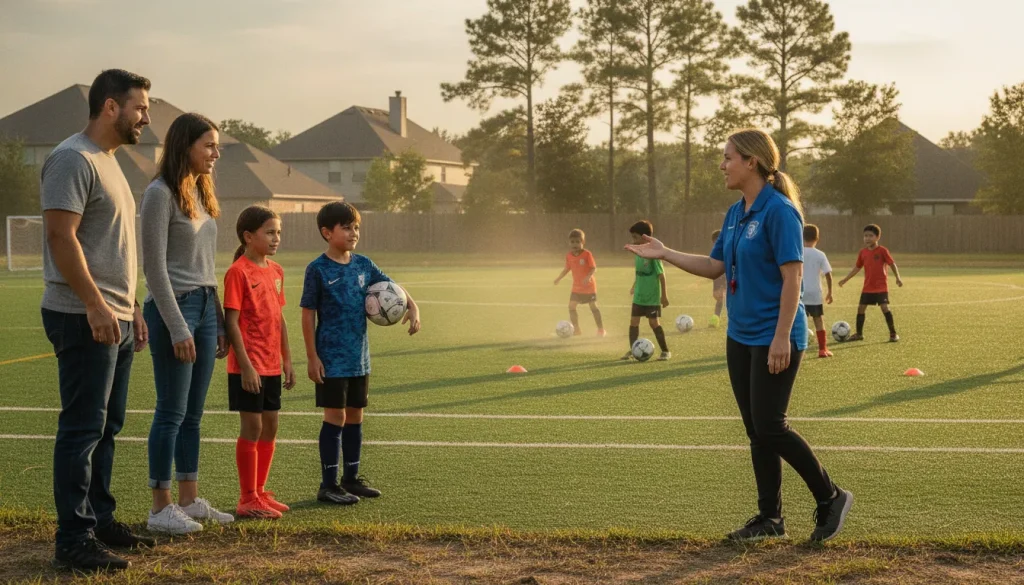
Choosing a soccer club is less about finding the most impressive brochure and more about finding a workable match for your child’s goals, readiness, schedule, and confidence. For Conroe and Oak Ridge families, the right questions often matter more than the loudest promises: Is the program recreational, developmental, or competitive? How will coaches give feedback? What will practices, games, and travel require each week?
Visit a NEXO FC Open House to evaluate fit and ask current program questions before you commit.
When comparing youth soccer Conroe TX options, start by matching the program model to your child’s needs, then verify coaching, total costs, locations, travel, and culture directly with each club. Recreation, development academies, competitive teams, camps, and longer-term pathways are not interchangeable, so a thoughtful comparison can prevent an expensive mismatch.
A useful evaluation begins with fit rather than hype. Look at what each program actually offers, what your family can sustain, and what your child experiences during training. That framework makes the differences between local options easier to judge fairly.
How to compare youth soccer Conroe TX programs by fit, not hype.
For families in Conroe and Oak Ridge, the right program is not automatically the one with the loudest claims, biggest name, or most intense schedule. Start with your child’s goals, readiness, confidence, and interests. Then weigh the practical realities: how often your family can attend, how far you can drive, what level of challenge feels healthy, and whether the club’s culture matches your values.
First, identify what you are actually comparing. Recreation, development academies, competitive teams, camps, and multi-stage pathways serve different purposes. They should not be treated as interchangeable. A recreational program may be the right introduction or a good fit for a child who wants a flexible team experience. A development-focused or competitive program may suit a player who wants more structured coaching and challenge. The useful question is not which model sounds most impressive, but which model supports this player’s next step. For a deeper side-by-side explanation, review competitive versus recreational soccer.
Use the same questions with every club. What will a typical week require? Where are practices and games held? How are players placed, coached, and given feedback? What costs and inclusions are confirmed in writing? How much travel is expected during the season? A clear answer is more useful than a broad promise about development or winning.
Physical activity is another part of the decision, but soccer should not be presented as the only way to meet a child’s health needs. The CDC recommends at least 60 minutes of moderate-to-vigorous physical activity daily for children and adolescents ages 6 to 17. Consider how soccer fits alongside school, free play, other activities, rest, and your child’s overall well-being.
Finally, let your child help evaluate the fit. Notice whether the coaching environment encourages questions, effort, teamwork, and confidence. A program that works on paper still needs to feel workable and positive for the player and family who will live its schedule.
Recreation or competitive soccer: which model fits your child?
There is no single right level for every player or family. A good choice matches your child’s current readiness and goals with the time, travel, and support your household can provide. Recreation can be a strong starting point for learning the game, building confidence, and enjoying regular activity. A development academy may add more structured instruction and progressive challenges. Competitive soccer usually places greater emphasis on consistent training, team standards, and playing against more demanding opponents.
|
Pathway |
May fit a player who wants |
Questions for the family |
|
Recreation |
A welcoming introduction, flexible participation, and enjoyment of the game |
Will the player have enough challenge and a positive first experience? |
|
Development academy |
More focused coaching while continuing to build technical and game understanding |
What skills are taught, how is progress communicated, and what commitment is expected? |
|
Competitive team |
Regular team training, structured competition, and a clearer performance pathway |
Can the child and family manage the schedule, travel, costs, and emotional demands? |
Readiness is more than skill. Consider whether your child wants additional challenge, responds well to coaching, can handle mistakes without losing enjoyment, and is willing to attend consistently. A child who is enthusiastic about learning may be ready for a more structured environment, while another may benefit from more time in recreation before moving up. The decision can also change as interests, school demands, and family logistics change.
Family capacity matters just as much. Before choosing a competitive pathway, ask about practice frequency, game locations, tournament expectations, total costs, and what happens when a player misses a session. Do not assume that a program labeled competitive has the same schedule or travel demands as another club. For a deeper overview of the distinctions, read this guide to competitive versus recreational soccer.
When comparing youth soccer Conroe TX options, evaluate the actual experience your child will receive rather than the label alone. Observe a session if possible, ask how players are placed and coached, and listen to your child’s response afterward. The best fit is the pathway that supports meaningful growth while remaining realistic and healthy for your household.
What questions should you ask a Conroe soccer club?
A club’s website can explain its philosophy, but families still need practical details before choosing a program. Ask the same questions at every visit so you can compare options fairly. NEXO’s public information does not establish FC tuition, fee inclusions, recurring schedules, season dates, team format. Travel commitment, or refund terms, so parents should request those details directly rather than assume them. Review the published NEXO FC information, then use the conversation to confirm what applies to your child.
- Coaching:
Who leads this team, what coaching education or experience do they bring, and how do they create a positive, development-focused environment?
- Feedback:
How will my child receive feedback? How often do coaches discuss progress with players and parents, and what development goals will we track?
- Placement:
How are players evaluated and placed? What happens if the initial team or level is not the right fit, and can placement change as a player develops?
- Cost:
What is the total expected cost, including registration, uniforms, training, league or tournament fees, facility charges, travel, and optional expenses? Which costs are included, and when are payments due?
- Logistics:
Where are practices and games held? What days and times are typical? How far might games or tournaments require families to travel?
- Policies:
What happens when a player misses training or a game? Ask about makeup options, weather cancellations, schedule changes, refunds, withdrawals, and sibling considerations.
- Culture:
How does the club handle playing time, mistakes, conflict, parent behavior, and concerns about a coach? Ask what respectful competition looks like in daily practice.
Listen for specific, understandable answers rather than broad promises. You can also ask whether the club can share current written policies, a sample calendar, or references appropriate for your child’s age and program. A club visit should help both sides assess fit, not pressure your family into a decision before you understand the commitment.
How much travel and weekly commitment should families expect?
A program can look convenient on a map and still create a demanding weekly routine. Before registering, ask for the expected calendar in practical terms: how many practices occur each week, how long each session lasts, when teams typically train, and how much advance notice families receive for changes. A clear answer helps you compare soccer with school, homework, other activities, and family responsibilities.
Separate practice travel from game travel
Practice location is only one part of the commute. Ask whether home games and away games use different fields, how far the team usually travels, and whether the club can provide a typical game-radius estimate for your child’s age group and team level. League geography can change the answer. For example, Houston Dutch Lions describes its competitive teams as participating in local and regional leagues. Families should confirm what "regional" means for the specific team rather than assume every weekend will be nearby: review the club’s published program information.
Ask about tournaments, timing, and the full season
Tournaments may add single-day or weekend travel beyond the regular game schedule. Ask how many tournaments are expected, whether attendance is required, which days games are usually scheduled, and whether overnight stays are possible. Also request the season calendar, including start and end dates, breaks, evaluation periods, and any expected off-season training. These details matter more than a simple "two practices and one game" description because the total commitment includes driving, arrival time, field setup, and recovery.
Finally, clarify the family logistics. Is carpooling common or formally coordinated? Are practice locations consistent? What happens when a player misses a session or a family cannot travel? The public NEXO FC information does not establish a recurring schedule, season dates, team format. Or travel commitment, so families considering NEXO should ask directly instead of filling in those details by assumption. The right youth soccer Conroe TX program is one whose development goals and real weekly demands fit your child and your household.
What does meaningful player development look like in practice?
Meaningful development is visible in how a player approaches the game, not only in the final score. A growing player begins to scan before receiving the ball, recognizes space, chooses when to pass or dribble, and explains why a decision made sense. These behaviors show progress in decision-making, spatial awareness, and game understanding.
Look for skills that transfer into the game
Technical work matters when it helps a player solve real problems. A coach might connect first touch, passing, turning, and ball control to pressure from an opponent or the need to create space. Tactical clarity also grows when players understand their role, see options away from the ball, and adjust as the play changes. The goal is not to make every child play identically. It is to help each player become more aware, capable, and confident within the team.
Resilience is another observable part of development. Players should have opportunities to respond to mistakes, try a different solution, and stay engaged when a drill or match becomes difficult. Teamwork includes communication, supporting teammates, accepting responsibility, and making decisions that help the group. Parents can ask coaches how they give feedback, whether players understand the purpose of an activity, and how challenges are adjusted for age and readiness.
Separate a published approach from a guaranteed outcome.
As one example, NEXO FC’s development approach is described by the company as emphasizing decision-making, spatial awareness, tactical clarity, individual technique, game understanding, resilience, and team play for its advertised 6-12 age group. This is a published program description, not independent proof of a particular player outcome. Families should use a visit or conversation with the coaching staff to understand how those priorities appear in training.
A useful evaluation question is simple: Can the club show what players practice, how feedback is delivered, and how challenge changes as a child develops? For additional training outside a regular program, families can also review NEXO Soccer Camps, then confirm the current focus and fit before registering.
Is NEXO FC a fit for your Conroe or Oak Ridge family?
NEXO FC may be worth considering if your family wants a structured development setting and your child is ready for more than a casual kickabout. It is one option among the youth soccer programs serving families in and around Conroe and Oak Ridge, not a universal answer. The right choice depends on your child’s goals, confidence, readiness for coaching, weekly availability, commute, and the culture your family wants around the game.
According to its published program description, NEXO FC is designed for players ages 6-12. The stated focus includes decision-making, spatial awareness, tactical clarity, individual technique, game understanding, resilience, and team play. Those are the club’s published priorities, so treat them as a starting point for your evaluation rather than as independently measured outcome claims. You can review the NEXO FC development approach and ask a coach how those ideas appear in a typical session.
Check the practical fit before you commit
NEXO FC lists 28137 Robinson Rd., Conroe, TX 77385 as its primary published training and event venue. That location may be practical for some Conroe and Oak Ridge families, but your actual drive, work schedule, school commitments, and game locations still matter. Confirm the current practice schedule, game schedule, team format, travel expectations, total fees, what those fees include, and refund terms directly with the club. The public program information does not establish all of those details, and families should not fill the gaps with assumptions.
The clearest fit check is to let your child experience the environment. An Open House or tryout can help your player assess the coaching and pace while you ask questions about placement, feedback, expectations, and next steps. Review current availability and register through the NEXO FC Open House and tryout information. If you are evaluating an earlier introduction to soccer, NEXO also publishes soccer programs for young players for ages 2-5. Compare what you observe with your family’s needs, and be comfortable choosing another program if it is the better fit.
A simple club-visit checklist before you commit
A club visit should help your family replace assumptions with firsthand evidence. Bring your child, take notes, and compare each option against the same practical questions.
- Observe a real session.
Notice whether players are engaged, coached respectfully, and given age-appropriate chances to make decisions. Watch how the coach corrects mistakes and includes quieter players.
- Ask for the total cost.
Request tuition, registration fees, uniforms, training, tournament, referee, and travel-related costs, along with what is included. Ask about payment timing, refunds, and possible extra charges. NEXO’s public site does not establish every FC fee or inclusion, so families should confirm details directly.
- Map the weekly commute and game travel.
Write down practice locations and times, then ask where games and tournaments usually occur. A local practice address does not automatically tell you the full travel commitment.
- Ask how feedback and placement work.
Find out how coaches evaluate players, communicate development priorities, handle team placement, and help families understand the next step.
- Talk with your child afterward.
Ask what felt fun, challenging, welcoming, or uncomfortable. Their experience matters alongside the schedule and budget.
- Compare notes before deciding.
Place clubs side by side for coaching, development fit, culture, cost clarity, commute, game travel, and your child’s confidence. A visit to NEXO’s primary published venue at 28137 Robinson Rd., Conroe, TX 77385 can be one point of comparison, not a reason to skip the same questions.
The balanced decision rule is simple: choose the program that fits your child’s goals and readiness while your family can realistically support its cost, calendar, travel, and culture. If you are still evaluating, visit a NEXO FC Open House as a low-friction way to experience training and ask current questions before committing.
Review current Open House registration details before making a larger commitment.
Frequently Asked Questions
How do I know whether recreation or competitive soccer is right for my child?
Start with your child’s goals, readiness, and interest in structured training. Recreation may be a better fit for flexible participation and lower commitment, while competitive development usually brings clearer coaching expectations, team placement, and a more demanding schedule. Ask how the club defines each pathway, then consider whether your family can support the weekly routine without making soccer stressful.
What should I ask about the total cost of a youth soccer program?
Ask for the full season cost in writing, including registration, training, uniforms, league or tournament fees, travel, and optional expenses. Also ask about payment timing, refunds, sibling policies, and what happens if your child changes teams. NEXO’s public site does not establish FC tuition, fee inclusions, or refund terms, so families should confirm those details directly rather than assume.
How can I find out how much travel a Conroe soccer club requires?
Ask where practices, league games, and tournaments are held; how often teams travel; how far games may be from Conroe; and whether weekday commitments are typical. A club’s local training address does not necessarily define its game geography. Map the likely schedule against work, school, and family responsibilities before committing.
How can I evaluate whether a Conroe soccer club is a good fit?
Attend a session or Open House, observe how coaches teach and give feedback, and ask how players are placed and supported. Compare the answers with your child’s experience and priorities. NEXO FC publishes a primary training and event venue at 28137 Robinson Rd., Conroe, TX 77385, and describes development areas such as decision-making and technique, but families should confirm current program details before enrolling.
Ready to Explore NEXO FC?
Choosing a club is easier when your family can see the environment, ask practical questions, and consider whether the development approach fits your child. Review the current registration details and use the NEXO FC Open House as a low-friction way to evaluate fit before making a larger commitment. Visit the NEXO FC Open House registration page to get started.
Categories
NEXO FC
Find your player's next step
Four ways to play at NEXO FC, all led by the same coaching staff.