
Youth Soccer Positions: What Each Player Does
NEXO FC
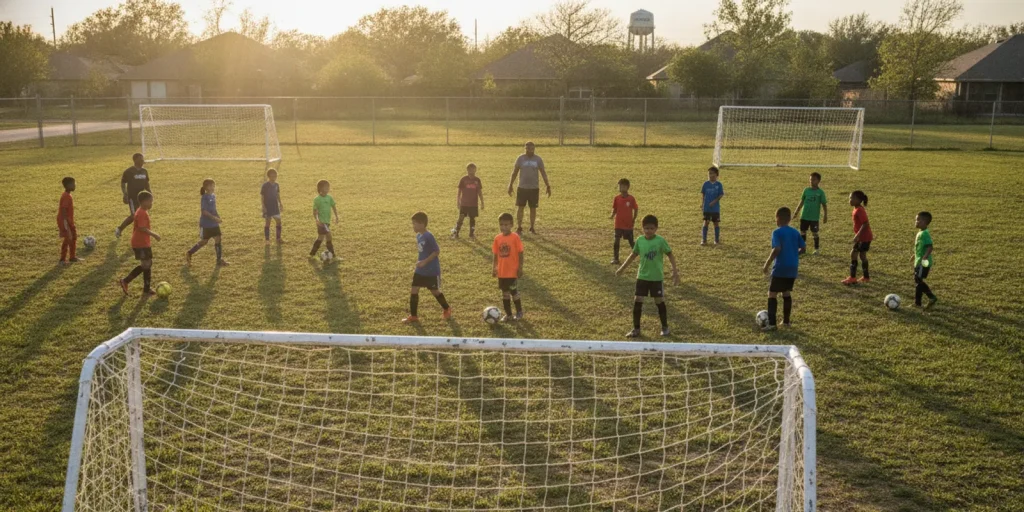
Youth soccer positions can look confusing because the same player may have a different job in each formation. The main roles are easier to understand when you consider what the team needs: protect the goal, win or move the ball through midfield, create chances, or finish attacks. This guide explains each role, shows how responsibilities shift during a game, and offers parents ways to support a young player’s learning.
What do soccer positions tell a player to do?
A position is a starting point for understanding responsibilities, not a permanent boundary on the field. Teams use positions to stay connected, cover important spaces, and give players options when they have the ball. The exact task depends on the formation, the phase of play, and what is happening around the ball.
A defender may begin an attack with a forward pass. A midfielder may drop back to help protect the goal. A forward may press a defender who has possession. Players need to read the game and adjust rather than stand in one spot because of a position label. Coaches also use different names for similar roles. A wide midfielder and a winger both work near a sideline, but their starting positions and defensive responsibilities may differ. Jersey numbers vary, too, so learn the role rather than assuming a number always means the same thing.
It helps to think of a position as a set of questions, not a map pin. Where is the most useful space for me right now? Which teammate needs support? What should I protect if the other team gets the ball? A player who can answer those questions is learning the role even if they are still developing their speed, touch, or confidence. The job may change from one moment to the next, but the team still needs the player to notice what is happening and make a helpful choice.
What are the main youth soccer positions?
Positions are often grouped into goalkeeper, defenders, midfielders, and forwards. These labels describe where players tend to operate, but each role has its own responsibilities. The details can vary by coach and formation, so the descriptions below are general guides rather than fixed rules.
What does a goalkeeper do?
The goalkeeper protects the goal and is the only player who can use their hands inside their own penalty area, subject to the rules. A keeper watches the ball, adjusts position, reacts to shots, and communicates with teammates. On a team that builds from the back, the goalkeeper also helps start play with a pass or throw. Goalkeeping is more than diving: the player judges when to stay near goal, when to move out to collect a ball, and how to organize defenders. Young players should learn gradually and should not be pressured to play in goal if they are uncomfortable.
For example, if an opponent is carrying the ball toward the side of the penalty area, the goalkeeper may adjust toward that side while staying prepared for a shot or pass across goal. If a teammate has the ball and no opponent is close, the keeper might move to a position where they can receive a safe back pass. Those choices require attention to the ball, goal, teammates, and nearby attackers. Parents can notice and praise a keeper’s communication or calm decision, not only a save.
What do center backs do?
Center backs play centrally in defense. They protect the space in front of goal, track opposing attackers, and help prevent dangerous passes or shots. When the team wins the ball, they look for a safe pass into midfield or move it to a teammate in space. Good defending is not just chasing the ball. A center back may stay goal-side of an opponent, cover a teammate who has stepped forward, or shift across as the ball moves. Communication helps defenders coordinate who challenges and who provides cover.
A simple example: one defender steps toward an attacker with the ball, while the other stays a little deeper to guard against a pass or run behind. If both defenders chase the same player, the space behind them can open. The players are working as a pair, not competing to make the tackle. When the ball moves wide, center backs also adjust across the field so they remain close enough to protect the central route to goal.
What do fullbacks do?
Fullbacks, also called outside backs, defend the left or right side of the back line. They try to stop opponents from advancing down the wing and protect the area near the side of the penalty box. They can also support attacks by offering a pass along the sideline or moving forward when their team has control. The balance depends on the coach’s plan. If one fullback advances, a teammate may need to cover the open space. Players should notice one another’s movement rather than treating every position as an individual assignment.
When an opponent has the ball near the touchline, the fullback may try to guide play away from the center without diving into a challenge too early. When a teammate has possession, the fullback could stay wide as an easy passing option. If the winger has already moved wide, the fullback might support behind or move inside, depending on the plan. These are choices players learn through practice and coaching, not a checklist they must solve perfectly every time.
What does a defensive midfielder do?
A defensive midfielder, sometimes called a holding midfielder, plays in front of the defenders. The role can include blocking passing lanes, helping win the ball, and providing an outlet when defenders need a pass. After a turnover, the player may recover quickly to protect the center. This position can require patience. The player may not score or make the final pass, but good positioning can help the team keep possession and make central attacks more difficult.
Imagine a center back with the ball and an opponent closing in. A holding midfielder can move into a visible passing lane, check their shoulder, and receive facing a useful direction. If the pass is not safe, the midfielder can move to support rather than demand the ball. Without possession, the player may stay between the ball and the central attacking area. A good contribution might be preventing a forward pass before it happens, even if there is no tackle or dramatic moment.
What do central and attacking midfielders do?
Central midfielders connect defense and attack. They look for passing options, help keep the ball, and move to support teammates. One midfielder may focus more on defending while another is encouraged to move forward. An attacking midfielder usually plays closer to the forwards. The player may receive between the opponent’s midfield and defense, turn toward goal, combine with teammates, or try a pass that creates a chance. Awareness matters: players need to scan before receiving and choose what to do next.
Consider a midfielder receiving a pass with an opponent approaching from behind. If the player looked around first, they may know whether they can turn, play one-touch to a teammate, or protect the ball and pass backward. None of those choices is automatically right in every situation. A safe pass can be a smart decision when the forward lane is blocked. A forward pass can be useful when a teammate has found space. The player’s task is to notice options, not force an ambitious play every time.
What do wingers and wide forwards do?
Wingers and wide forwards operate near the left or right side of the attack. They can stretch the defense, carry the ball forward, pass across the field, or move inside toward goal. When possession changes, they may help defend the flank or press an opponent. A wide player does not have to stay beside the touchline throughout the game. Holding width can create space for a teammate in the middle; moving inside can open a lane for a fullback. The right choice depends on the ball and teammates.
If the ball is on the opposite side, a far-side winger can be ready for a pass across the field, but should also be aware of the opposing fullback. If the ball is on their own side, they can decide whether to take on a defender, combine with a nearby teammate, or move into a space closer to goal. Young players sometimes assume that success means dribbling past everyone. Seeing a teammate in a better position and making a pass is also a positive attacking decision.
What does a striker do?
A striker, also called a center forward, leads the attack and looks for chances to score. The player may run behind the defense, receive with their back to goal, combine with midfielders, or occupy defenders to create space for teammates. When the other team has possession, a striker may press and guide the opponent toward a less dangerous area. Scoring is important, but it is not the only contribution. A useful run can create space even if the player never touches the ball, and an effective press can help the team win possession.
A striker can help the team by checking toward the ball to offer a short pass, then turning or laying the ball off to a teammate. At another moment, the better run may be away from the ball to draw a defender out of position. If teammates are building from the back, the striker can remain available farther upfield and avoid crowding the player who is trying to receive. Coaches may ask the striker to press a particular defender; the cue might be the pass or the opponent’s first touch. The role includes reading those cues as well as trying to finish.
How does a formation change each position?
A formation describes how a team arranges players, usually excluding the goalkeeper. Common examples include 4-3-3, 4-4-2, and 4-2-3-1. The numbers generally show defenders, midfielders, and forwards from back to front. They do not show every movement players make during a game. In a 4-3-3, three forwards may press high or move inside while three midfielders connect play and cover central space. In a 4-4-2, two lines of four can create a compact shape, with two forwards working together. In a 4-2-3-1, two deeper midfielders support the defense, while three attacking midfielders play behind a central forward. These are examples, not fixed instructions. A team may defend in one shape and attack in another, and coaches may adjust during a match. For a young player, useful questions are: Where should I be when we have the ball? What space should I protect when we do not? Who can I help?
One way to understand the difference is to follow a fullback in each arrangement. In a 4-4-2, the wide midfielder ahead of the fullback may help defend the side, so the pair can share responsibility. In a 4-3-3, a winger may stay higher or move inside, leaving the fullback to judge when to advance and when to hold. The diagram alone cannot tell you exactly what that player should do; the coach’s instructions and the movement of teammates matter. If a player is confused, asking for one clear responsibility in attack and one in defense is more useful than trying to memorize every possible pattern.
Numbers can also be misleading because formations shift as the game changes. A team listed as 4-3-3 might look more like a line of four midfielders when defending, then have a fullback join the attack when it has possession. The players have not necessarily changed their positions permanently; they are responding to the moment. At youth level, coaches may also use smaller-sided shapes or different language. Focus first on spacing, connection, and responsibilities rather than deciding whether every moment matches a diagram.
What changes when the team has or loses the ball?
In attack, a team needs passing options, useful space, and movement toward a scoring opportunity. In defense, players protect dangerous areas, stay connected, and make it harder for opponents to advance. When the ball changes sides, players far from it still have work to do: defenders shift across, midfielders adjust to stay available or protect the middle, and forwards prepare for a pass or press. After a turnover, the nearest player may pressure the ball while teammates recover to cover space. If the team wins it back, players look for a safe way to attack. These habits apply across positions. Scanning, communication, and quick responses help players contribute from different parts of the field.
- When your team has the ball:
move where a teammate can find you, look for space, and decide whether to pass, dribble, or advance.
- When your team loses the ball:
react promptly. Pressure the ball if nearby or recover to protect space.
- When your team wins the ball:
check for a safe forward pass. If none is available, help keep possession.
- When the ball is far away:
adjust your position, watch opponents, and prepare for the next pass or transition.
These phases can happen quickly, so simple cues help. A player can think “find an option” when a teammate controls the ball, “recover” when possession is lost, and “look forward, then secure” when the team wins it. A cue is not a rigid command. If a nearby teammate is already pressuring the ball, another player may be more useful covering an open space. If a forward pass is risky, keeping possession may be the wiser response. Players learn to coordinate these choices by watching teammates and practicing the same situations.
Try following one sequence during a match. A defender passes into midfield, then moves to offer a return option or cover space. The midfielder turns and finds a forward, while wide players spread out. If the opponent intercepts, the nearest player responds to the ball and teammates recover toward the goal side. If the team regains possession, players immediately look for safe support. The sequence shows that roles connect; no player can make every part of the play happen alone.
How should a young player choose a position?
There is no single position that fits every child. Preferences can change with experience, confidence, interests, team needs, physical growth, and coaching guidance. Some children enjoy defending and reading play; others like carrying the ball, creating passes, or taking shots. Parents can ask: “When did you feel most involved?” “Did you enjoy having the ball, stopping an attack, or helping a teammate?” “What decision felt difficult?” “Would you like to try another position?” These questions invite curiosity rather than judgment. A player can be proud of a smart pass or defensive read even when neither appears on a scoreboard. Parents can also ask the coach how the role supports the team and what skill could help the player grow.
It can help to separate enjoyment from immediate success. A child may like a position even when the role feels challenging, or feel successful in a role they do not want to play every week. Ask what part was satisfying: getting involved often, seeing the field, making a tackle, combining with teammates, or trying to score. Then ask what the child wants to learn next. This gives the family a more useful conversation than asking only whether the player scored or whether the coach kept them in one spot.
Parents can also notice what kind of challenge a child is ready to take on. A player who enjoys being involved in many parts of the field may be curious about midfield. A child who likes anticipating an opponent’s next move may enjoy learning defensive responsibilities. A player who enjoys creating chances might ask to try a wide or attacking role. These are starting points for conversation, not a test or a prediction. Interests can change as players become more comfortable with the ball and understand more of the game.
Should children specialize in one position early?
A young player may have a favorite position, but trying different roles can help them see the game from different viewpoints. A defender who plays in midfield can learn how hard it is to receive under pressure. A forward who defends may learn how movement closes a passing lane. This perspective can help players understand teammates’ responsibilities. A rotation may reflect team needs, learning goals, or the stage of a game; families can ask the coach what the player is meant to learn. Avoid treating a position preference as a limit or a promise about future selection. One difficult game does not prove that a child belongs in one role forever. Focus on effort, decisions, communication, and growth over time.
Rotation works best when a player knows the basic purpose of the role they are trying. Before a game, a coach or parent can help the child identify a small goal: “Offer a passing option when our defender has the ball,” or “Stay connected to your partner when we defend.” Afterward, discuss one moment when the player remembered that goal. The aim is not to grade every action. It is to make a new position feel understandable enough that the child can participate rather than worrying about getting every detail right.
Specializing less can also make the team’s needs easier to understand. A player who has experienced more than one role may better recognize why a teammate drops back or moves wide. That perspective can encourage communication and cooperation. Still, a child does not need to play every position equally or enjoy every role. Families can share preferences with the coach while staying open to development opportunities and the team’s plan.
What should parents watch for during a game?
To understand a position, watch what a player does before and after the ball arrives. A midfielder may scan and move into space. A defender may cover a teammate instead of chasing the ball. A forward may run to pull a defender away. Try watching one player for a few minutes, then consider the whole team. Does the player offer a passing option? How do they adjust when the ball moves to the other side? What happens after a turnover? Are teammates close enough to help? Does the player communicate and respond to instructions? These observations show more than counting goals or mistakes. After the game, mention one decision you noticed, ask what the player saw, and listen to their view.
A simple observation routine can make the game easier to follow:
- Choose one player to watch for a few minutes rather than tracking the ball every second.
- Notice their starting position when a teammate has possession and whether they move to offer support.
- Watch what they do when the opponent wins the ball: pressure, recover, or cover a teammate.
- Notice how they communicate or adjust when the ball moves to the opposite side.
- Ask the player what they were trying to do in one moment you observed.
This is not a scorecard. It is a way to see the work that can disappear when attention stays only on the ball. If the child wants feedback, describe what you noticed without claiming to know what the player should have done. “I saw you move into the open space before the pass” invites the player to explain their thinking. “Why didn’t you pass?” can sound like a correction before the parent knows what the player saw.
What skills help players in every position?
Several foundations matter throughout the field: close control, accurate passing, receiving with awareness, moving into useful space, and making decisions under pressure. Communication and resilience matter too. Goalkeepers work on handling, footwork, and reading shots. Defenders practice positioning, timing, and coverage. Midfielders benefit from scanning, turning, and choosing between forward and safe passes. Forwards work on movement, combination play, finishing, and pressing. The details should fit the player’s age and learning stage. For families comparing options, understand the development approach rather than focusing only on position names. NEXO FC describes its competitive youth program for ages 6–12 through decision-making, spatial awareness, tactical clarity, technique, and team play. Review NEXO FC program information and ask about fit, expectations, and next steps.
Many position-specific skills build on the same basic habits. Scanning before the ball arrives helps a defender see an opponent, a midfielder identify a passing option, and a forward judge whether to check toward the ball or run behind. A controlled first touch gives the player more than one next action. Communication can be as simple as calling a teammate’s name or giving a clear cue about pressure. These skills are useful because they help players make a decision, not because they guarantee a particular result.
At home, families can encourage learning without trying to replace the coach. A player might describe a moment from a match and explain what options they saw. They could practice a comfortable pass or ball-control activity if they want to. Keep the activity enjoyable and appropriate for the child. If a player feels frustrated about a role, encourage them to ask the coach for one specific skill to work on. A short, clear focus is easier to apply than a long list of corrections.
How can a player learn a new position?
A player does not need to master every detail before trying an unfamiliar role. Ask the coach for one or two priorities, such as protecting the center or offering a wide passing option. Learn the starting position and the space to cover. Scan around rather than staring only at the ball. When unsure, support a teammate, protect a dangerous space, or make a safe pass. Afterward, reflect on one moment that went well and one question for the next practice. Learning takes repetition. It is normal to forget a responsibility while concentrating on the ball; calm reminders are more useful than sideline criticism.
A player can use a practical three-part plan. Before the game, ask where to begin and what to do when the team has the ball. During play, keep checking the ball, nearby opponents, and available teammates. After the game, recall a moment that was clear and a moment that was confusing. The player can take the confusing situation to the coach rather than guessing at a complicated rule. This approach makes a position feel like a set of learnable decisions instead of a label the child has to perform perfectly.
For example, a child moving from forward to fullback might focus first on staying goal-side of an opponent and offering a safe pass when the team has possession. They do not need to learn every overlapping run or defensive adjustment in one day. A midfielder trying striker could focus on checking toward the ball and then finding space again. The coach can clarify the team’s expectations. Small priorities give the player a way to participate confidently while experience builds.
How do positions work in small-sided youth games?
Young players may begin in formats with fewer players than the full-sided game. The field is smaller, the number of teammates changes, and coaches may use simpler role names or shapes. A child may be asked to defend, support the middle, or stay available ahead of the ball instead of memorizing a full formation. The principles remain: notice the ball, find useful space, help teammates, and respond when possession changes. In a small-sided game, a player may get frequent chances to attack and defend because fewer teammates share those tasks. Do not assume a smaller format means every player has a permanent specialty. Rotation can expose children to different parts of soccer. If a player is unsure, a simple cue can help: stay connected, find an open space, or protect the goal side.
When there are fewer players, the distance between roles can shrink. One child might help defend and then quickly support an attack. That can feel busy, but it also makes the connection between decisions visible: after passing, the player can move to help again instead of watching. Encourage the child to notice the nearest useful space rather than trying to cover the entire field. Coaches can adapt instruction to the group and game format, so families should avoid comparing a young player’s role to a full-sided formation chart.
Parents may hear a child described as a defender or attacker in a small-sided activity, but those words do not necessarily mean the player only defends or attacks. The child may be learning to transition between tasks and work with teammates. Ask what the coach wants the player to notice in that game. A simple answer such as “help the player with the ball” or “get back between the ball and our goal” can make the role easier to understand.
What do positions look like in common situations?
When a defender has the ball, nearby teammates should offer options. A fullback might provide a wide pass, a midfielder may move into a central lane, and a forward can make a run farther upfield. The defender checks for pressure and chooses a pass they can complete. When the ball is on the opposite side, defenders shift while watching opponents near goal, midfielders stay available or cover the center, and a far-side winger prepares for a switch. After a turnover in midfield, the closest player may pressure the opponent; others recover toward goal and block forward routes. If the team wins it back, players look for a safe attack. These examples are not scripts. Players follow the coach’s plan, communicate, and make the best decision available.
Here is another situation: a winger receives the ball near the sideline with a teammate nearby and a defender in front. The winger can try to move past the defender, pass to the supporting teammate, or protect the ball until another option appears. The fullback behind may offer a safe way to keep possession. A midfielder can move into a central lane for a pass. The striker may stay ready for a forward ball or move to create room. Each player’s movement affects the choices available to the others.
Now imagine the opponent wins the ball. The nearest player may try to slow the attack, while teammates recover into useful spaces. A center back may protect the route toward goal rather than sprinting toward the ball. A midfielder can help close a central passing lane. A wide player can track back if the opponent is advancing on that side. The exact response depends on the coach’s approach, but the broader point remains: a player away from the ball can still help the team defend.
Finally, think about an attack that reaches the opponent’s penalty area. The player with the ball needs options, but teammates should not all crowd the same space. A forward may move toward goal, a midfielder can arrive behind the play, and a wide player might remain available for a pass or cross. If the defense blocks the first attempt, players need to react to the next phase. Staying alert after the first action is part of every role.
What position habits can parents avoid misreading?
Some useful actions are easy to miss if you watch only the player with the ball. A defender who stays back may protect space. A midfielder who turns away from goal may keep possession safe. A forward who runs away from the ball may create a lane for a teammate. A role is not a personality: a goalkeeper need not be loud, and a forward still has defensive work. The player who touches the ball most is not automatically doing the most. Good positioning can help a teammate receive comfortably or block an opponent’s route. Notice those moments without turning every game into a review. Supportive conversation is more useful than a long list of corrections.
It is also easy to mistake a quiet period for a lack of involvement. A defender may have positioned well enough that the opponent did not find a dangerous pass. A forward may have made several runs that moved defenders but did not receive the ball. A midfielder may have covered space instead of joining the attack. Ask what the team needed in that moment before deciding whether the player was active. Soccer includes anticipation and movement as well as touches, tackles, and shots.
Likewise, a mistake does not define a position or a player. A missed pass can be a chance to learn how much time was available. A defender who was beaten may need to adjust distance or angle next time. A goalkeeper may review their starting position with the coach. Keep feedback specific and kind. The player can learn from a moment without feeling that one error proves they are in the wrong role.
What can a player ask the coach?
Clear questions can turn general instructions into a plan. A player can ask: “What space matters most in this role?” “Where should I move when a teammate has the ball?” “What should I do first when we lose possession?” “How can I help when I am far from the ball?” “What skill should I practice?” The answer may depend on the team shape, age group, or learning focus. A young player does not need a tactical lecture; one clear responsibility and a practice example may be enough. After a game, the player can consider whether they recognized that situation and what they might try next time.
Parents can help the child choose a good time to ask. A brief question before or after practice is often clearer than trying to discuss several plays immediately after a match. The player can describe a specific moment: “When our fullback had the ball, should I have stayed wide or moved toward the middle?” A concrete example makes it easier for the coach to explain the intended movement. If the answer is new or surprising, the player can repeat it in their own words to check that they understood.
Families can ask about learning goals without demanding a permanent position or a guaranteed result. Useful questions include how the coach introduces roles, what the player should focus on in the next session, and how rotation fits the team’s development plan. Keep the conversation collaborative. Coaches see the full group and may be balancing many needs, while the family can share what the child enjoys and finds difficult.
How can families decide whether a development environment fits?
A position guide cannot determine whether a team suits a child. Consider how coaches explain roles, whether players get chances to make decisions, how teammates communicate, and whether expectations fit family goals and schedules. At a practice, notice whether instruction is clear and respectful. Do players understand what they are working on? Are they encouraged to solve problems? Families around Conroe and North Houston can use an Open House as a low-pressure way to learn more when fit is uncertain. Ask about age group, training focus, expectations, and next steps. Do not assume current fees, schedules, team placement, or travel; request information for the specific program and player.
Watching an activity can help families see whether the learning approach suits the child. Do players get chances to make choices with the ball? Are they encouraged to recover and try again after a difficult moment? Does the coach explain a role in a way the player can understand? A single observation cannot answer everything, but it can give a family useful questions to take to the coach. Think about your child’s temperament and goals as well as the style of play. Some players need time to feel comfortable in a new environment; others want to know the expectations right away.
Families can also distinguish what they have observed from what they still need to ask. For example, you may see that players practice receiving and passing, but should ask how a program handles placement, schedule, and expectations if those details matter to your family. A short list prepared in advance can keep the conversation focused: What age group is appropriate? What should a player be ready to learn? What are the next steps if we want more information? This helps families evaluate fit without assuming details that have not been confirmed.
Review NEXO FC program details
Frequently asked questions
What is the easiest soccer position for a beginner?
There is no universally easiest position. Each role has different responsibilities, and a beginner may find one more comfortable because of interest or experience. Clear coaching and chances to try different roles help a player learn what suits them.
Do soccer positions have fixed numbers?
No. Some teams use traditional numbers, but conventions vary. Learn what a player is expected to do rather than assuming a number always identifies one position.
Can a player change positions during a game?
Yes. Teammates may cover for one another as the ball moves, and coaches may make tactical changes or substitutions. Communication helps cover important spaces.
Is a striker only responsible for scoring?
No. A striker can create space with runs, connect passes, help teammates, and press defenders. Goals matter, but they are one part of the role.
How can I help my child after a game?
Ask how the game felt. Mention a specific effort or decision, then listen before offering advice. If the player is unsure about a role, help them prepare a question for the coach.
Understanding youth soccer positions is less about memorizing a formation and more about seeing how players support one another. When a young player learns to read space, make decisions, and stay connected to teammates, those lessons can travel with them to any position on the field.
Categories
NEXO FC
Find your player's next step
Four ways to play at NEXO FC, all led by the same coaching staff.